
The three prices, in one line.
Classic $55 per guest. Signature $85 per guest. Reserve $225 per guest. Two-hour service baseline. Twenty-guest minimum for standard planning. Additional service hours are $500 each.
What "per guest" actually includes.
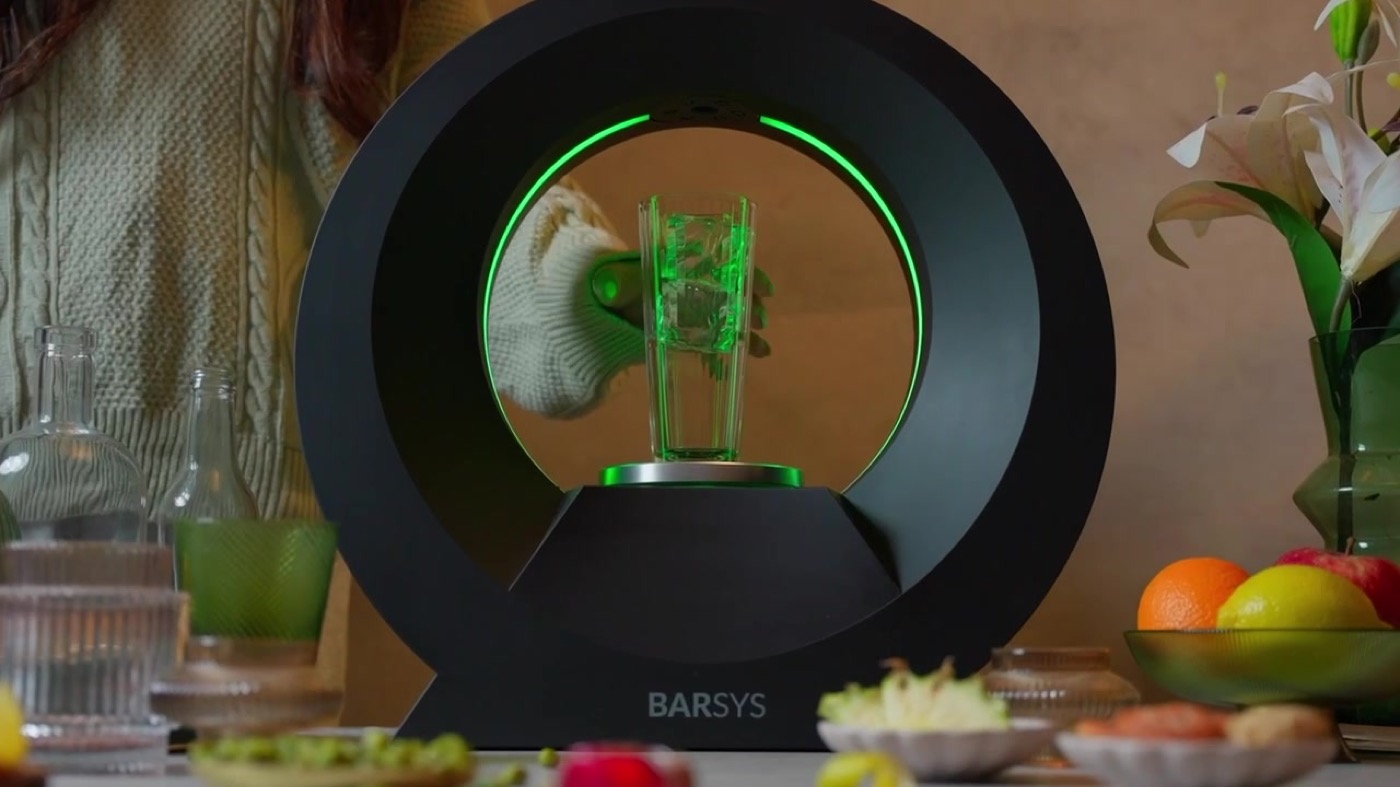
The per-guest number is the flat rate for the bar service: the Barsys 360 cocktail machine, the ingredients on the chosen mixlists, the bartender or bartenders, glassware, garnish, setup and cleanup. It does not vary by drink count. A guest who has one drink and a guest who has four pay the same because you are not counting drinks — you are booking the service.
What each tier gets you.
- Classic — $55 per guest. One curated mixlist from the library of 27. One Barsys 360 machine. One bartender. Setup and cleanup. The choice for a team-only evening, a low-key thank-you, or a bar that runs alongside a food menu that is doing most of the work.
- Signature — $85 per guest. Two or three mixlists, premium mixers, dry garnishes, a second bartender for larger rooms, and a Shaker Pro station for the signature drink of the evening. Most office happy hours and holiday parties land here.
- Reserve — $225 per guest. Up to five curated mixlists, a dedicated event lead running the room, glass-forward garnishes, and the option of a custom drink named for the occasion. Client dinners, executive gatherings, milestone celebrations.
See the tier-by-tier comparison on packages.
What is confirmed in the proposal.
Tax lands on the invoice. Additional service hours are $500 each — a three-hour evening is the two-hour rate plus $500, a four-hour evening is plus $1,000. Freight elevator fees, after-hours building access, corkage on any beer or wine you bring in yourselves, and any custom garnish or branded ingredient work are itemized in the proposal. There are no online bookings and no online payments; the proposal goes out by email and is signed off before the date is held.
How it compares to hiring a bartender.
A freelance bartender in New York City runs roughly $75 to $150 an hour with a three- to four-hour minimum, plus a bar rental, plus every bottle and mixer and garnish sourced separately by whoever is hosting. Add the two or three trips to the liquor store, the borrowed shaker, the ice you forgot, and the last guest asking for a drink that requires the ingredient you did not buy. The per-guest number closes all of that in advance.
Hidden costs to watch for elsewhere.
- Bar rental. Portable bars run $200 to $600 for the evening if the venue does not have one. The Barsys 360 sits on any two-foot counter — no bar rental is needed.
- Ingredient over-buy. Hosts consistently buy 20 to 40 percent more spirit than a room drinks. In a per-guest model, that risk sits with us, not with you.
- Ice and glassware. Rental glassware is $0.50 to $2 per piece plus a delivery fee. Included at every tier here.
- Cleanup labor. A separate line on many bar-service quotes. Included here.
- Corkage. If the venue has an in-house bar and you bring in your own service, corkage on outside beer or wine can be $10 to $25 a bottle. That is on the venue, not on us — worth asking before the venue is signed.
Why per-guest is the right unit.
Two questions decide bar-service cost: how many people are drinking, and for how long. Per-guest pricing collapses the first question into a single flat rate and lets the room size the room. It also removes the incentive for the bar team to under-pour or run short on ingredients, which is the failure mode most hosts fear about hosted-bar service. When the number is per guest and not per drink, the bar team wants every guest to have three or four drinks over two hours — that is the healthy service window.
Per-hour bartender pricing pushes the opposite direction: fewer drinks per hour means more overtime, so the bar goes slow. Per-consumption pricing means the host is doing running math all night. Per-guest, priced against a fixed service window, is the model that lets everyone in the room forget the bar is a line item.
How the two-hour baseline compares to reality.
Two hours is the modal length of a hosted-bar corporate event in New York City. It fits a 5-to-7 or 6-to-8 window on a weeknight without pushing venues past their standard access hours. It covers the peak of drink orders, which lands in the first 40 minutes and the last 30 minutes of any bar service — the arrival rush and the "one more before we go" rush. And it stays inside the alcohol-service liability window most companies have signed off on internally.
When the event wants to push longer, the $500-per-hour add is the right call. Three hours reads as an event with a real conversation window. Four hours reads as a full evening and usually only makes sense if food service overlaps meaningfully. The additional-hour cost is flat regardless of guest count, so it gets cheaper per head as the room grows — $500 across 150 guests is $3.33 per head.
Sample budgets for real event sizes.
- 35-person client evening, Classic, two hours. 35 × $55 = $1,925. One 360, one bartender, one curated mixlist. Add tax and any venue charges in the proposal.
- 60-person team happy hour, Signature, two hours. 60 × $85 = $5,100. One 360, two bartenders, two mixlists plus a zero-proof list, Shaker Pro station for the signature drink.
- 150-person executive dinner, Reserve, three hours. 150 × $225 = $33,750, plus $500 for the third hour, for $34,250. Two 360s, one Shaker Pro, a dedicated event lead, up to five curated mixlists, glass-forward garnishes.
- 250-person company milestone, Signature, three hours. 250 × $85 = $21,250, plus $500 for the third hour, for $21,750. Two 360s, two bartenders on the machines, one on the Shaker Pro station, three or four mixlists including a zero-proof list.
Each budget is the bar service line. Tax and venue-imposed charges go in the proposal.
How to choose between tiers.
The tier decision is a function of two things: what the event is for, and how much menu variety the room wants. If the event is a working team happy hour and everyone knows each other, one mixlist and one bartender on Classic is enough. If the event is a client dinner or a milestone celebration and the guest list is heterogeneous, two or three mixlists on Signature reads better. If the event is client-facing, executive-attended or a moment the company wants to remember, five mixlists on Reserve gives room for a champagne toast, a bespoke drink named for the occasion, and a proper zero-proof tier.
Small events and custom formats.
Standard planning starts at 20 guests. Below that, or for anything outside the two-hour hosted-bar format — a full-day activation, a multi-station brand launch, a two-city tour — the pricing is quoted individually against duration, footfall, number of machines and staffing. Send the brief through the planner and pick the custom-quote path.
What to send in the inquiry to get a number back fast.
The team can turn a proposal around inside a business day if the inquiry has the four facts we need: date (or two candidate dates), guest count (best estimate is fine), venue address in New York City, and the tier the host has in mind. If the venue is not confirmed yet, that is fine — mention the neighborhood and floor type, and we can price against a typical footprint.
What the inquiry does not need: exact final guest count, final mixlist selection, or a signed venue contract. Those are all locked in the proposal-and-planning phase, after the date is held.
The tech included in every tier.
Every tier ships the Barsys 360 — same 152 ounces of canister capacity, same one-tenth-ounce pour, same six hours of cold without a refrigerator. Larger rooms on Signature and Reserve add a second 360 and a Shaker Pro station. Nothing about the machines changes tier to tier; what changes is the number of mixlists, the number of bartenders, the level of event leadership, and the depth of the garnish and glassware program. See technology for the equipment detail.
Talk numbers with the team.
Email contact@barsys.com or call +1 315-304-3820. Barsys, Inc., 44 W 37th St, New York, NY 10018. Include the date, guest count and venue if you have them, and the team replies with availability and a proposal against the numbers above.